How Should a Suit Fit? Expert Guide for the Perfect Fit
Updated
- By Jacobi's Men's Fashion
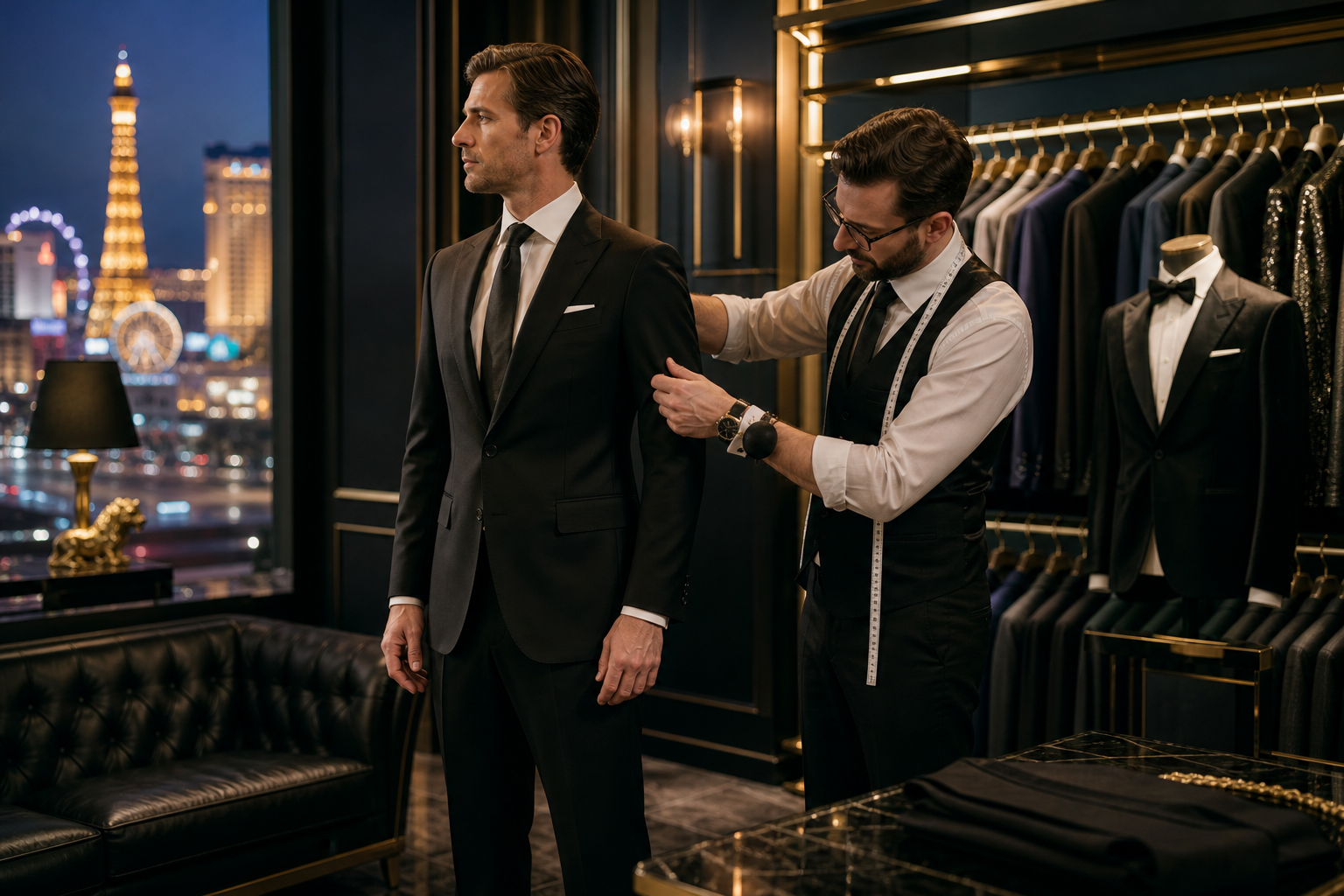
A suit should fit comfortably across your shoulders and chest, contour your waist without pinching, and allow natural movement through the arms and legs. Sleeves should stop at your wrist bone, and trousers should break lightly on your shoes. A well-fitted suit balances comfort and sharp lines, making you look confident and put-together from every angle.
Key takeaways
- The jacket should hug your shoulders snugly without pulling or sagging.
- Sleeves end at your wrist bone, showing a bit of shirt cuff.
- Pants should sit at your waist and have a slight break at the shoe.
- Comfort and movement are just as important as appearance.
- Jacobi's Men's Fashion in Las Vegas stocks suits for all body types, including big and tall.
Why does proper suit fit matter?
A properly fitted suit makes an immediate positive impression and boosts your confidence. When a suit fits as it should, it communicates attention to detail and respect for the occasion, whether you’re at a wedding, business meeting, or a special night out. Comfort and style go hand in hand: a suit that looks great but feels tight or restrictive will distract you and limit your natural movements.
One of the most common fit mistakes is wearing a jacket with shoulders that extend past your own, creating a boxy, oversized look. Another is trousers that puddle around the shoes or jackets that sag at the waist. These errors not only affect your silhouette but also the way you present yourself.
Wearing a suit that fits properly gives you the freedom to move with ease and ensures you look sharp at all times. The right fit is more than just appearance; it’s about feeling your best.
At Jacobi's Men's Fashion in Las Vegas, Nevada, we see firsthand how a well-fitted suit transforms both look and self-assurance.
How should a suit fit? Key areas explained
The ideal suit fit is achieved by fine-tuning several key areas:
Shoulders: The jacket should sit squarely at the edge of your shoulders. If the shoulder seam extends beyond your natural shoulder, the fit is too large. If it pulls or creates divots, it's too tight. The shoulder is the hardest part to tailor, so it must be right from the start.
Chest and torso: The chest should feel snug but not restrictive. You should be able to button the jacket without strain or gaping. There should be no X-shaped pulling at the button. The torso should drape close to your shape, with gentle contouring at the waist.
Waist: The jacket should taper gently at the waist, creating a clean silhouette. Too much suppression will restrict movement, but too little leaves the jacket boxy.
Seat and hips: Trousers should sit comfortably across your seat, not pulling or sagging. You should be able to sit without feeling pinched, and there should be no excess fabric pooling behind your thighs.
Jacket length: A classic guide is that the jacket should cover your seat and end around the mid-point of your hand when your arms are at your sides. Too short looks trendy but can be unflattering, while too long overwhelms your frame.
Sleeve length: Jacket sleeves should end at your wrist bone, allowing a bit of shirt cuff to show. This frames your hands and completes the look.
Trouser fit and break: Trousers should rest comfortably at your natural waist. The hem should touch the top of your shoes with a slight break, meaning a small crease where the fabric meets the shoe, not a stack of folds.
Fit checklist: Is your suit right?
Use this checklist to quickly assess your own suit fit:
| Area | Good Fit | Poor Fit (what to watch for) |
|---|---|---|
| Shoulders | Seam matches your shoulder edge | Shoulders extend past or pull inward |
| Chest | Button closes easily, no pulling | X-shaped creases or sagging |
| Waist | Gentle taper, no pinching or boxiness | Darts pull, or jacket flares out |
| Seat | Smooth drape, no pulling or sagging | Tight across seat or excess fabric behind |
| Jacket length | Covers seat, ends mid-hand with arms down | Too short (exposes seat), too long (past seat) |
| Sleeve length | Ends at wrist bone, shirt cuff visible | Too long (covers hand), too short (shows wrist) |
| Trouser break | Light crease at shoe, no bunching | Excess fabric pools, or trousers too short |
If you notice more poor fit markers, it’s time to consider alterations or a new suit.
How do I get the right suit fit for my body type?
Fit adjustments depend on your body type. Big and tall men need suits with broader shoulders, longer sleeves, and more room through the chest and waist. Look for brands or stores that carry extended sizes, such as Big and tall suits at Jacobi’s. Jackets with a little more structure and single vents often flatter larger frames.
Athletic builds, with broad shoulders and narrow waists, benefit from jackets with some waist suppression and trousers with a bit more seat room to balance proportions. A slightly tapered pant leg creates a clean line without looking too slim.
Shorter and slimmer men should avoid overly long jackets and wide lapels, which can overwhelm their frame. Cropped jackets with higher button stances help elongate the body visually, and slim or modern-fit pants prevent a baggy look.
Women’s suit fit basics focus on shaping the jacket to the bust and waist, with darts and seams that follow natural curves. Sleeves and trousers should be tailored to avoid excess fabric, ensuring a smooth, sharp look.
How should a suit fit when you move?
A properly fitted suit should allow you to move freely, whether you’re raising your arms to shake hands, sitting down at a meeting, or walking through a crowded event. When you raise your arms, the jacket may lift slightly but shouldn’t pull uncomfortably at the shoulders or back. If you feel restricted or the jacket rides up excessively, the fit may be too tight in the shoulders or chest.
Sitting down, your jacket should lie flat across your thighs and chest, with minimal bunching. If the back collar stands away from your neck or the jacket pulls at the button, consider more room in the chest or waist.
Walking and reaching forward, the sleeves should not ride up more than a small amount. Any tightness across your upper back or arms is a sign the jacket is too fitted. A small amount of movement is normal, but you shouldn’t feel constricted.
Remember, a great fit feels natural in motion, not just when standing still.
What can be tailored, and when should I go custom?
Most suits can be tailored for a better fit, but some areas have limits. A tailor can adjust sleeve and trouser length, take in or let out the waist, and refine the seat and hips. Minor shoulder or chest adjustments are possible, but large changes may not look natural.
Choose custom or made-to-measure suits if you have trouble fitting off-the-rack options, have unique proportions, or want specific design features. Jacobi’s offers a wide range of sizes and expert tailoring, helping most men achieve a great fit without going fully custom.
When buying off-the-rack, focus on getting the shoulder and chest right first. These are hardest to alter. You can adjust the waist, sleeves and pant length more easily. Try on a few cuts (classic, modern, slim) to see which matches your shape best.
For a breakdown of suit fabrics and how they affect fit, see our Suit fabric guide.
How do classic, slim, and modern fits compare?
Below is a comparison of three common suit fits and who they suit best:
| Fit Type | Jacket Shape | Trouser Fit | Best For |
|---|---|---|---|
| Classic | Relaxed, straight | Comfortable, straight | Traditional style, fuller builds |
| Modern | Slightly tapered shape | Trim, not tight | Most men, blends tradition and trend |
| Slim | Close, sharp taper | Narrow, fitted | Slim or athletic builds, youthful look |
Classic fits offer more room and timeless appeal. Modern fits strike a balance for most men. Slim fits are best for those with leaner or athletic shapes who want a sharp, contemporary silhouette.
What expert tips should I know for my next suit fitting?
For your next fitting, wear a dress shirt and the shoes you’ll wear with the suit. This helps your tailor check sleeve and trouser length accurately. Bring any accessories you plan to wear, like a belt or watch, to ensure a natural fit.
Ask your tailor specific questions: Can the shoulders be adjusted? How much can the waist be taken in? What’s the best sleeve length for my shirt cuff? The more direct your communication, the better the result.
At Jacobi’s, we recommend standing, sitting, and moving around during your fitting. Our experienced staff will work with your body type and preferences, whether you’re choosing an off-the-rack option or need tailoring. With a large selection of suits in stock, including Big and tall suits, and decades of expertise, we help ensure every customer leaves with a suit that truly fits.
Book your perfect fitting at Jacobi’s in Las Vegas
Ready to experience the confidence of a perfectly fitted suit? Jacobi’s Men's Fashion in Las Vegas specializes in classic, modern, and big & tall suits for every occasion. Book a fitting today and let our style advisors help you look and feel your best.